

(🤞🤞🤞) as foreign policy
Who's really wishcasting in the Iran War?

On March 16, I posted a critique of the US’s so-called “excursion” in Iran, in which I lamented the steep costs of the spiraling conflict and warned that it wouldn’t end well. My point was simple: Secretary of Defense Pete Hegseth and President Donald Trump were too focused on “military victory” and not enough on Iran’s ability to inflict strategic pain, especially in the Strait of Hormuz.
As a reward, I was hailed in the comments as an “unserious” Trump-hater nitpicking “the most successful military operation in modern history.” My post “isn’t analysis,” I was told. I am instead just one among many critics “desperately wishcasting a bad end to the 2-week old war so that they can drop some sick zingers in their next article.” “Sorry Iran,” they continued, “there are more important things at stake here - some substack writers need to have been right!”
Now, I will admit that I do like being right. But I try to care about actually being right, not just feeling that I’m right. The difference is that I’m committed to considering the reasons why I might be wrong, however uncomfortable that may be. No one likes to imagine that they might have been deluding themselves—but there’s not really any other way to protect against catastrophic wrongness.
So in the spirit of keeping ourselves honest, let’s revisit a prediction left in that very same comment:
When the Strait of Hormuz issue ends up not being an issue in either a free Iran (🤞) or just another few weeks, I look forward to the next thing the pundit class decides was ackshually a huge failure.
Well, it’s been two months. Iran is far from free. Is Hormuz still an issue?
Within a week of this prediction, Iran had already set up a “toll booth” on the Strait of Hormuz, controlled by their Revolutionary Guard.
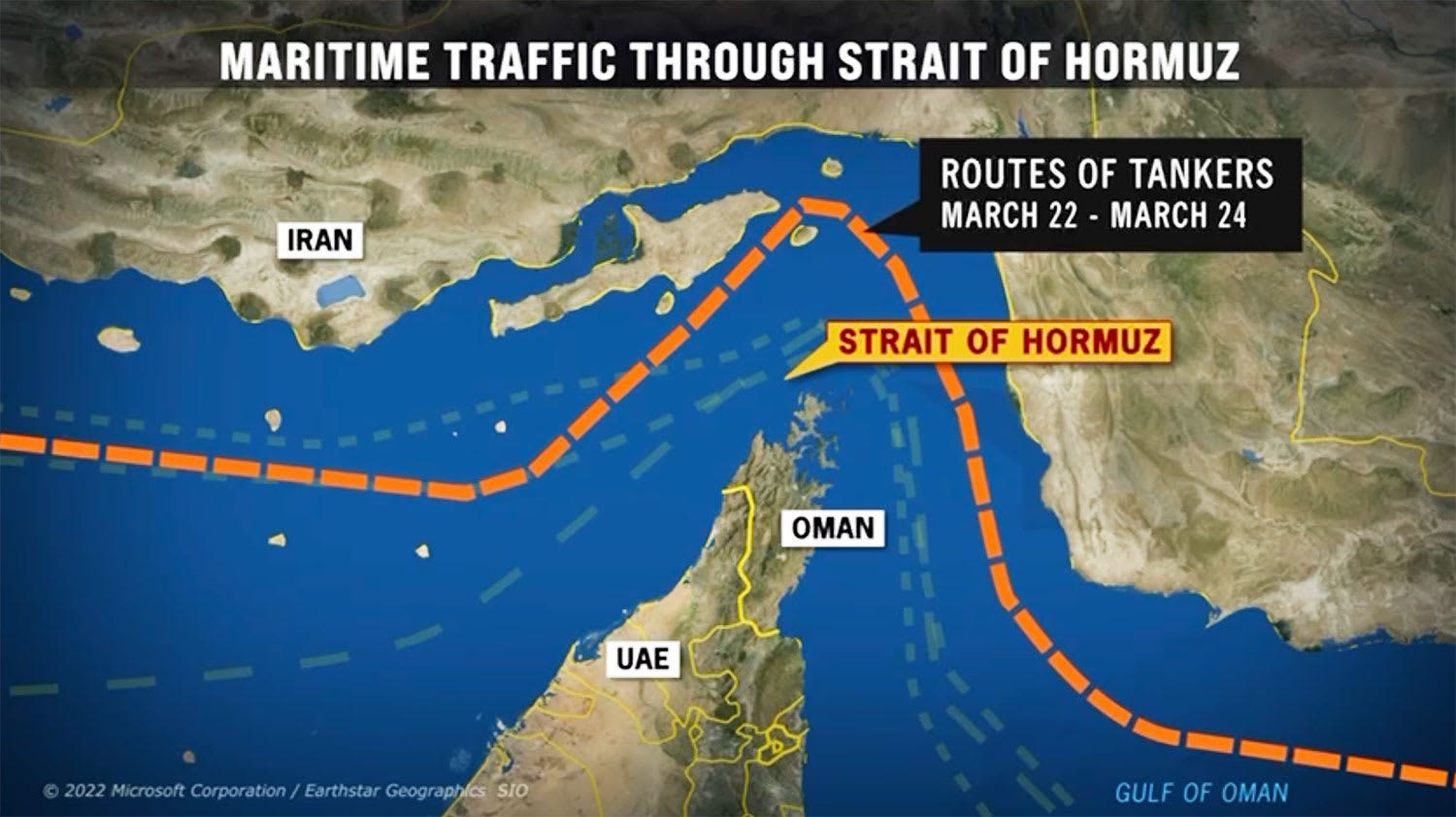
Just today, the informal arrangement became official, as Iran announced the formation of the Persian Gulf Strait Authority:

Nor does any of this appear to be getting better. America’s allies—battered by tariffs, resentful of Trump’s demands for a 51st state—have mostly not heeded the White House’s call for help in the Strait. The US’s bargaining position is weak, with a wobbly legal mandate for war and a strong incentive to make peace. The Pentagon has spent $29 billion on the war already, and on top of that, American consumers are paying an extra $1.4 billion per day, according to estimates from AEI. Iran, meanwhile, is nowhere close to saying “uncle.” On the contrary, they are demanding reparations as part of a deal, and they intend to keep their toll booth on the Strait.1
So much for the Strait of Hormuz being a non-issue.
The commenter also found my emphasis on Trump and Hegseth unwarranted:
What about the entirety of the non-Trump and non-hegseth military? Generals? Pentagon planners? People that are actually experienced and competent and have been wargaming this for literal decades. Let’s just ignore them, they clearly don’t matter despite doing literally 99% of their work, because Trump said a stupid!
That’s an interesting point. Maybe all the action is going on backstage, and by focusing on Hegseth and Trump—who hog 100% of the spotlight despite doing 1% of the work—I’m missing out on what’s really happening?
But Trump isn’t just making “1%” of the big decisions: he called the shot to attack Iran. See this remarkable New York Times report, which I suspect was sourced by Vice President J.D. Vance’s camp as a way to deflect responsibility from the VP, who (unlike Hegseth) seems to have opposed the war.2 Trump’s responsibility is even more obvious given his unwillingness to build even the semblance of support in Congress or among the US’s allies. To be sure, Trump does not bear responsibility for the micro-behavior of particular US soldiers, but that wasn’t the subject of my post. I was talking about overall strategy.3
More important, however, is that there may be some degree of wishful thinking even among the “experienced and competent” members of Trump’s national security team. In general, I do not recommend a policy of trusting the national security experts on faith; this is exactly the naivety that led Matt Yglesias and Ezra Klein (then in their youth) to support George W. Bush’s calamitous war in Iraq. Here’s what Klein would later write:
I supported the Iraq War, and I’m sorry.
I have my excuses, of course. I was a college student, young and dumb. I thought that if U.S. President George W. Bush and Secretary of State Colin Powell and former President Bill Clinton and U.K. Prime Minister Tony Blair all thought it was necessary, then that was because they had intelligence proving as much. I thought there was no way the Bush administration would neglect to plan for the obvious challenges of the aftermath. I turned on the war quickly when I saw how poorly and arrogantly it was being managed.
But at the core of my support for the war was an analytical failure I think about often: Rather than looking at the war that was actually being sold, I’d invented my own Iraq war to support — an Iraq war with different aims, promoted by different people, conceptualized in a different way and bearing little resemblance to the project proposed by the Bush administration.
Yglesias, similarly, came to regret the trust he placed in “elite signaling” from Hillary Clinton, John Kerry, and others.
In late March, I got to hear from an extremely experienced, undeniably competent national security expert—someone with military credentials who had worked as a diplomat during the first Trump Administration. This expert was participating in a panel discussion about the Iran War at my university. During the Q&A, a student asked a heated question about American war crimes, particularly alluding to the strike on a girls’ school that had killed over 100 students. The expert’s response was even more heated. To the best of my memory: “You think that American soldiers did that intentionally? I’ve been in the room for those kinds of decisions. No American leader would do that. You need to have faith in your country.” The room full of students and teachers was stunned—then they laughed. “I mean it,” the expert insisted. “You have to trust your fellow countrymen.”
The thing about trust is that it’s hard to build—and easy to smash. Scolding young Americans for a lack of faith might have worked in days after 9/11, when the Dixie Chicks could be blacklisted for “unpatriotic” comments. But there’s no way it’s going to work now. I don’t think the US intentionally targeted a girls’ school. But why should I trust Pete Hegseth—a man who accidentally texts war plans to journalists, who bemoans “stupid rules of engagement,” and who in 2025 cut back the Pentagon’s work on civilian harm mitigation—to be vigilant about double-checking his intel and avoiding civilian casualties?
The expert, towards the end, went on to say that the war would usher in a brighter future for the Iranian people, who for so long have suffered under an oppressive government. I don’t doubt his sincerity. (Nor did the young Iranian woman in the audience who applauded his comments.) But if the Iran hawks want the American people’s trust, they need to do better than “have some faith” and 🤞🤞🤞.4
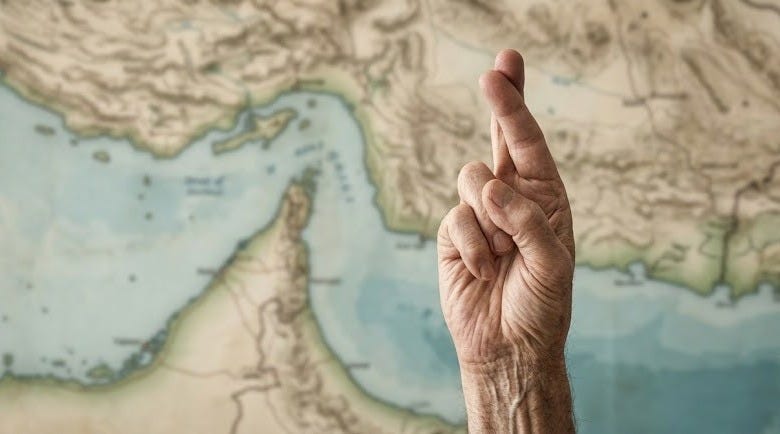
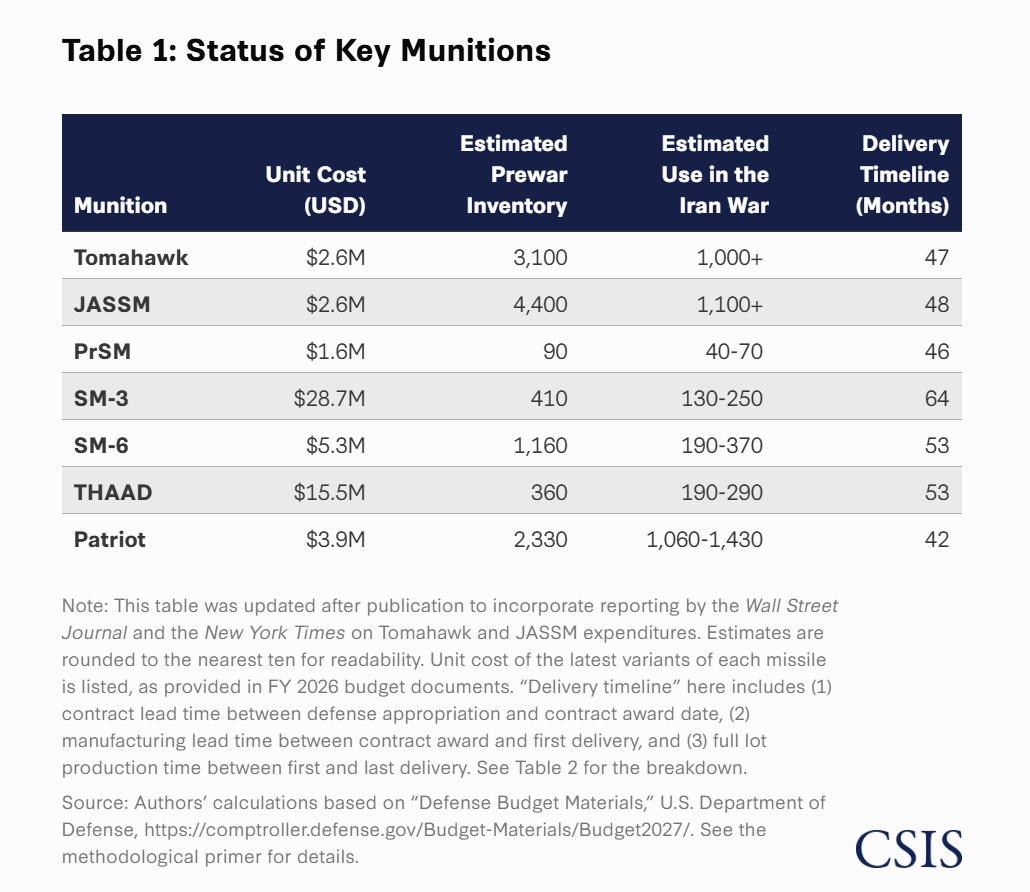
Did I mention the country’s diminishing munitions stockpiles?
A telling passage:
In front of his colleagues, Mr. Vance warned Mr. Trump that a war against Iran could cause regional chaos and untold numbers of casualties. It could also break apart Mr. Trump’s political coalition and would be seen as a betrayal by many voters who had bought into the promise of no new wars.
Mr. Vance raised other concerns, too. As vice president, he was aware of the scope of America’s munitions problem. A war against a regime with enormous will for survival could leave the United States in a far worse position to fight conflicts for some years.
The vice president told associates that no amount of military insight could truly gauge what Iran would do in retaliation when survival of the regime was at stake. A war could easily go in unpredictable directions. Moreover, he thought there seemed to be little chance of building a peaceful Iran in the aftermath.
In just war theory terms, I was talking big-picture jus ad bellum (justice in going to war), not nitty-gritty jus in bello (justice in carrying out a war).
Thanks to Keller Scholl, whose comment helped me clarify the penultimate paragraph.
I am kind of surprised that anyone still thinks the US could achieve any of its stated objectives in Iran.
-CIA reports Iran still has 70% of its missile and drone capacity; Iran claims it has 120% of its pre-war capacity.
-the Iranian coast along the Persian Gulf is the size of Vietnam, the terrain of Afghanistan, and they have drones,
-the Iranian military is 1 million strong in terms of professional soldiers with reportedly 6-7 million new volunteers since the war started
-(quoting John Mearsheimer): the historical record is clear that an air campaign has never been sufficient to effect regime change
-the US blockade of the Iranian blockade is not going to cause sufficient pain to force Iran to capitulate, and certainly the pain we are inflicting on the world is not worth it
The big pitch of Trump and Hegseth regarding military and other matters is that for every problem there is an obvious, cheap, quick and brutal solution and the reason previous administrations failed was because they were too constrained by conventions of legality and morality to go for it. So for Iran the obvious solution was there all along: just kill the leadership, don’t worry too much about collateral damage, and the Iranian people will take care of the rest of it.
Ironically for this exact reason they are actually incapable of doing what would need to be done to achieve their objectives, which would be a massive ground invasion, because the whole point is that Trump can achieve immediate results at no cost for America through the force of his will and toughness alone. Hence the repeated threats and assertions of victory while nothing has changed on the ground, as if it could be manifested into reality.