

The efficiency vs. equity dilemma is (usually) fake
Congestion pricing, algorithmic bias, price gouging, inclusive zoning, tax hikes—the world is full of false policy dilemmas. The only way forward is up.


A while back, New York City was debating the merits of congestion pricing, which charges drivers a fee to enter high-traffic areas, and the city found itself facing a classic dilemma of efficiency versus equity.
Congestion pricing is efficient: if you don’t charge downtown drivers, you’re letting them freely impose various costs on others—pollution, noise, traffic, and so on. These costs can be enormous. In a 2025 working paper, Enrico Moretti and Harrison Wheeler estimate the cost of nationwide traffic noise at $110 billion—with a “b”! Charging a fee forces drivers to “internalize” such costs, which encourages those drivers who have a good alternative to take it, while allowing those who really need to drive to do so.
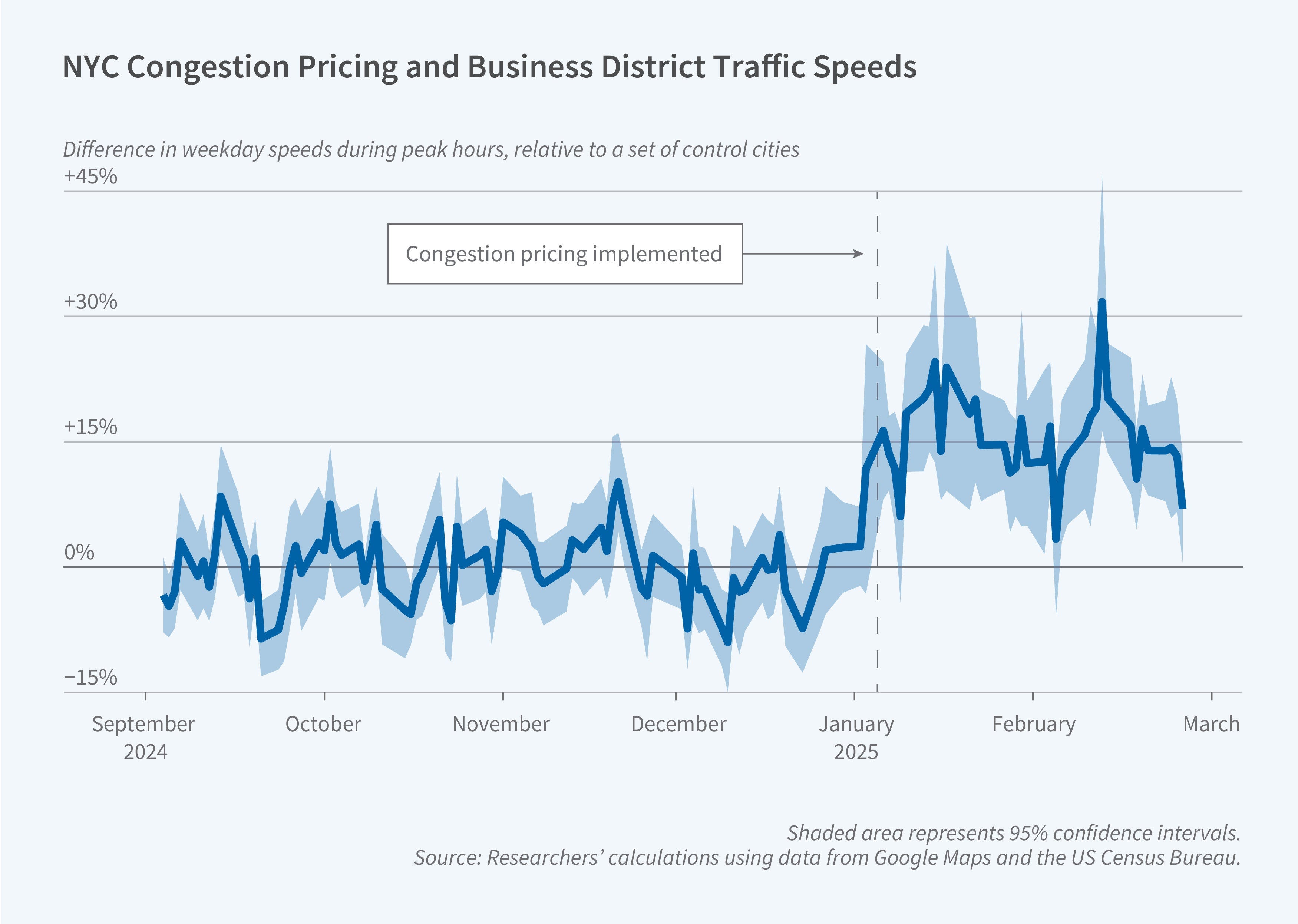
But as critics pointed out, congestion pricing is also inequitable: if we charge every driver a flat fee, poor drivers will be hit much harder. Egalitarians don’t like the idea of charging the same $9 toll to a communter on their way to make minimum wage as to a billionaire joyriding in their Rolls-Royce.
What should we do? Should we prioritize efficiency—or prioritize equity?
Trick question: you don’t have to choose. In the ethics of policy, the efficiency/equity dilemma typically arises as a sort of mirage, which disappears once we properly lay out the space of all policy options at our disposal. To do this, we need to use what Thomas Schelling called “two-dimensional” policy analysis.
But first, lest you think I’m just talking about cars in NY, I want to show you more examples. Once you know how to spot the efficiency/equity dilemma, you’ll notice it’s everywhere.
1. Biased algorithms
Consider the case of algorithmic bias. In the US, many judges base their sentencing and detention decisions on estimates from algorithms like Equivant’s COMPAS, which assigns a defendant a risk score based on their age, history, education, and so on.
This at least could be efficient: if the algorithm really does give high-quality estimates (a big “if”), the system will generate more public safety, on average, per year of incarceration.
But even if efficient, such algorithms are arguably inequitable. Case in point, a hugely influential 2016 report from ProPublica accused COMPAS of being “biased against blacks,” because the algorithm’s errors followed a troubling pattern:
“The formula was particularly likely to falsely flag black defendants as future criminals, wrongly labeling them this way at almost twice the rate as white defendants.”
“White defendants were mislabeled as low risk more often than black defendants.”
To be clear, ProPublica wasn’t alleging that COMPAS was designed to discriminate against black defendants, or that the algorithm explicitly took account of race. Rather, the problem was that the algorithm seems to have violated certain statistical criteria of fairness by tending to make errors in favor of one group and to the detriment of another.1 So there’s a dilemma: either we have biased decisions or benighted ones.
2. Price gouging
Some states in the US ban “price gouging,” which they define as raising prices on certain goods in an emergency.
Now, Econ 101 tells us that so-called “price gouging” will generally be efficient. If the price of toilet paper can go up, so can the quantity supplied; you avoid the problem of shortages. But you also create a problem of inequity: the rich will have an easier time paying $10 a roll (or whatever the price may be).
For a real example, consider Mike Munger’s story of the Goldsboro yahoos. When Hurricane Fran hit North Carolina in 1996, Raleigh lost power, and people there lost access to ice and cooling. “Insulin, baby formula, and other necessities immediately became susceptible to spoilage in the 92+ degree heat.” Some enterprising “yahoos” drove in from four hours away in Goldsboro, using chainsaws to clear the path for their two rented freezer trucks, which they’d stuffed with 500 bags of ice. The yahoos set up shop; Munger says they were selling at over $8 a bag (having bought at $1.70). People were, evidently, more than willing to wait in line to buy ice at that price. Thus the yahoos were more efficiently distributing the state’s ice, which was no longer languishing in Goldsboro while insulin spoiled in Raleigh. But the customers still resented the inequity. Eventually, someone must have called the cops, who arrested the yahoos, impounded the trucks—and all the while, the ice went undistributed.
Munger’s outrage leaps off the page:
And now we are back to where I started: the citizens, the prospective buyers being denied a chance to buy ice… they clapped. Clapped, cheered, and hooted, as the vicious ice sellers were handcuffed and arrested. Some of those buyers had been standing in line for five minutes or more, and had been ready to pay 4 times as much as the maximum price the state would allow. And they clapped as the police, at gunpoint, took that opportunity away from them.
And yet—to the chagrin of Munger and many other pro-marketeers—it doesn’t really matter how many times you preach the gospel of Econ 101. People just really do think price-gouging is immoral! If that’s right, then the dilemma is real: either we have to live with shortages or else let the poor get iced out.
3. Zoning and rent control
Say there’s a lot of unmet demand for rental housing in a nice neighborhood. It seems efficient to let developers build housing there—the developers get big bucks, and the renters get better housing. But if the rents are high, the poor will be priced out: another inequity.
One solution to the inequity is “inclusionary zoning”: require developers to set aside a certain percentage of new housing at below-market rates. But this makes it less profitable to build housing, which directly creates inefficiencies: there will be some developments that never happen, despite the presence of many willing renters, because the costs of inclusionary zoning make the prospect a financial loser for the developer. Again, the dilemma is a painful one. Either efficiency at the poor’s expense, or poverty-relief that gunks up the system.
Much the same point arises with rent control. If you let landlords raise rents, that will tend to increase the quantity (and quality!) of the housing supply in an efficient way. But it can seem inequitable. When a neighborhood becomes desirable, poor tenants may be unable to pay their rising rents, and so they are displaced by rich newcomers.
In defense of efficiency
I could add a zillion more examples.2 But you get the idea. Often the economically efficient policy is inequitable, and the equitable policy is inefficient.
You might respond by saying: so much for efficiency! We are human beings, with human rights, and we shouldn’t be violating one another’s dignity for the sake of some inhuman, technocratic value of “efficiency.”
But this response is less attractive than it sounds at first. The reason why is that, in the context of economic policy debates, “efficiency” doesn’t refer to some bloodless bureaucratic metric. It just refers to people getting what they want and need.
More specifically, “efficient” often just means Pareto-optimal, which is a fancy way to say “no win-wins left on the table.” So, when the Goldsboro yahoos are banned from selling ice to willing customers, that’s inefficient, because there was a win-win left on the table: money for the yahoos, ice for the good people of Raleigh. Infamously, this notion of efficiency is consistent with as much inequity as you like. (Notice that every outcome of a zero-sum game is “efficient,” including “I get everything, you get nothing.”) But that’s just to say that efficiency isn’t all that we want. We should still be loath to live with inefficiencies—unless we’re against win-wins, in which case we’ve got other problems.
“Escaping the dilemma”
Usually, I like to beat people over the head with the reality of tradeoffs and the unsolvability of the big problems with the human condition. But in this case, our problems might actually be solvable, thanks to an idea from the economist (and hero of the blog) Thomas Schelling, in a strange yet wonderful article called “Economic Reasoning and the Ethics of Policy.”
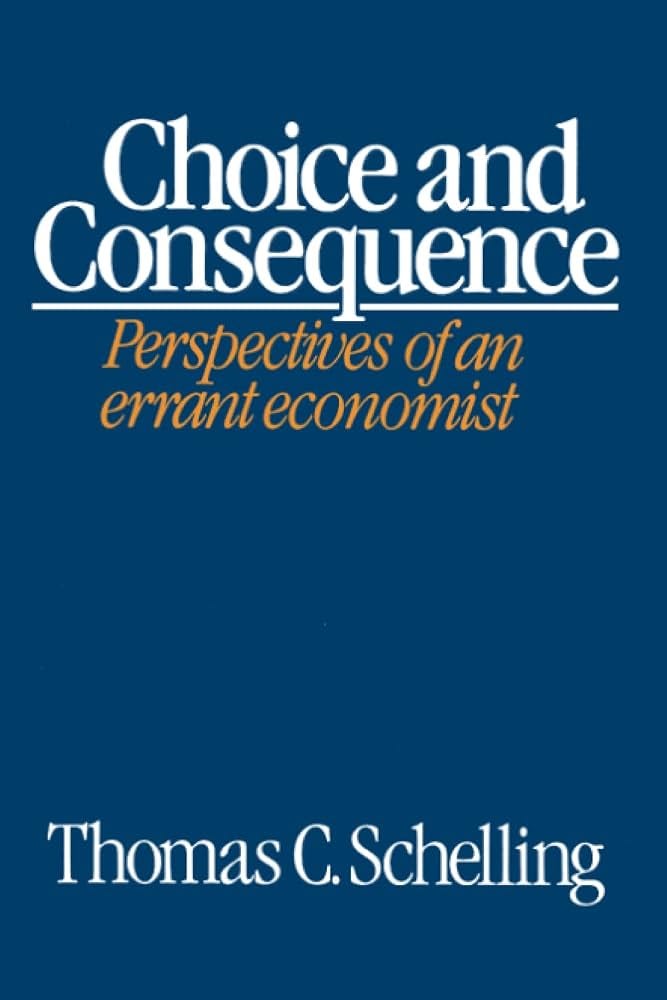
The article is strange because it rambles. Schelling talks about winning arguments with his students over gas rationing; he dwells on the unusual example of runway lights at airports. The article is also ethically a bit tone-deaf compared to Schelling’s other papers, a point stressed by the philosopher Bernard Williams (in a jewel of a review).3
I cite these reasons not to disparage Schelling’s paper, but to explain why its core insight has been so criminally overlooked.4
Schelling’s insight is that the efficiency/equity dilemma arises when we try to solve two problems using one policy. The solution is to solve the two problems using two policies. Kill two birds with two stones.

For example, in the case of congestion pricing, we have two problems: we want to charge drivers to minimize externalities, and we want to ease burdens on the poor. If we are thinking in one policy dimension, we are stuck with a tradeoff. The more we charge, the more pain for the poor. The less we charge, the more pollution, noise, and traffic. But why assume the solution has to lie along that one dimension, i.e. how much to charge drivers? We could instead think in two dimensions. We adjust congestion pricing to whatever point best addresses pollution (etc.), and then we separately address the problem of poverty using a dedicated anti-poverty policy. One option is to make the policy a kind of local or targeted thing—think: vouchers for poor drivers. Another option is simply to be more generous at a big-picture level, e.g. by making the tax code more progressive. Either way, it’s possible to achieve a win-win on efficiency and equity compared to any of the original policy options we had in the 1d space we started from.
The solution is perfectly general. Typically, our dilemma arises when there are two problems, such as a supply problem and a poverty problem. And we’re usually better off solving the two problems in two policy dimensions. For example, in an emergency, we might allow prices to rise while offering cash relief to the poor. In the case of algorithmic bias, we might use the most accurate algorithms while using other policies to address racial inequities directly. Rather than rent control, we might prefer uncapped rents and vouchers for poor tenants (the US has something like this, called “Section 8 housing,” which deserves a lot more credit than it gets).
That said, there’s a reason why we don’t live in a magic high-dimensional world where all our policy dreams come true. Often there are deep political or institutional obstacles facing the two-dimensional solution. As Schelling explains it, this is the crucial limitation of “the two-dimensional approach.”
Most important, the reasoning does not demonstrate that the superior policy or program technique is actually achievable. In particular it may depend on institutions that do not exist, or politics that are unacceptable, or administrative determinations that are infeasible.
But this is, notably, a very different problem from the original efficiency/equity dilemma. We have transformed a policy problem into a political problem. That is often enough to allow for significant progress. The political problem might be just as insoluble—but then it again, it might not.
Even better: sometimes going 2d will make your solution more politically tractable. One important example of this arises in tax policy. We seem to face a dilemma: equity favors a progressive tax system, but sometimes the most progressive taxes are painfully inefficient (e.g. wealth taxes), and usually the rich and powerful will fight them tooth and nail. Again, we have two distinct problems—equity and efficiency—that we are trying to solve by adjusting only one dimension: the progressiveness of the tax code. But Yale’s Ian Shapiro reminds us that we have a second dimension to consider—the progressiveness of government spending.
I think the trouble with the politics of tax is people tend to not think about the taxing side and the spending side together. So, you know, people jump up and down that we should have more progressive taxation. Well, progressive taxation is often a very costly way to raise taxes. And the cheapest ways to raise taxes are actually the more regressive ways, like a VAT, which is pretty regressive. But if you have progressivity on the spending side, it doesn’t really matter if it’s regressive on the taxing side.
So I’ve argued that the best way to tax is just to raise taxes in the most efficient way possible and then worry about the distributive dimensions on the spending side. Especially in a country like this, where exit costs are very low for billionaires.
The next time you’re feeling stuck in a policy dilemma, consider how many distinct problems you’re trying to solve—and how many distinct policies you’re using to solve them. Sometimes there is no need to suffer in n dimensions. There’s a solution waiting for you in dimension n + 1.
In the literature, the relevant criteria are called “Balance for the Positive Class” and “Equal False-Positive Rates.” (Mutatis mutandis for negatives.) For a superb overview of some of these issues, see Brian Hedden’s “On Statistical Criteria of Algorithmic Fairness,” Philosophy & Public Affairs (2021). (I was an early fan of this paper, nominating it for the American Philosophical Association’s AI2050 Prize—which it won!)
Six years after ProPublica’s piece on COMPAS, they came out with “Chicago’s ‘Race-Neutral’ Traffic Cameras Ticket Black and Latino Drivers the Most.” Again, there appears to be an efficiency/equity tradeoff. Some studies find that traffic cameras do reduce car crashes—of which there were over 85,000 in Chicago in 2022 alone. But the cameras, at least in Chicago, are clearly are imposing more burdens on black and hispanic drivers than white ones.
I’ve left this example in a footnote for two reasons.
I’m not actually sure that cameras do efficiently reduce injuries. I was impressed by this 2020 paper by Gallagher and Fisher, which looked at intersections in Houston where traffic cameras were suddenly shut off after a referendum, finding little to no effect on accidents or injuries. (Other studies don’t always ask why a camera was added or taken away, which creates “endogeneity” problems—e.g. the town puts up a camera because there was a fluky spike in wrecks last year at that intersection, and when wrecks regress to the mean the next year, it looks like the camera was having an effect.)
It’s not so straightforward that the fines are inequitable. We’d have to compare the benefits to black and hispanic Chicagoans (in terms of reduced mortality risk) to the costs (in terms of increased risk of fines)—among other complications, such as the obvious question of whether the racial disparity is due to the location of the cameras or a difference in driving.
Consider the minimum wage, tax breaks for parents (which are more efficient if scaled with income), government spending on citizens’ safety (ditto)—seriously, the problem is just utterly pervasive, and even if you’re undisturbed by some of the inequities/inefficiencies (e.g. because you think landlords have it coming), I bet you there will be some that you do care about.
Williams cites approvingly a passage from Schelling about the Titanic.
the success of organized society depends on traditions, attitudes, beliefs and rules that may appear extravagant or sentimental to a confirmed materialist (if there is one). The sinking of the Titanic illustrates the point. There were enough life boats for first class; steerage was expected to go down with the ship. We do not tolerate that any more. Those who want to risk their lives at sea and cannot afford a safe ship should perhaps not be denied the opportunity to entrust themselves to a cheaper ship without lifeboats; but if some people cannot afford the price of passage with lifeboats, and some people can, they should not travel on the same ship.
But why not apply that point more widely? Williams concludes his review:
Perhaps some people should be allowed to pay for better health care, while others with less money should not be denied the opportunity to entrust themselves to worse standards of medicine. But then they should not travel in the same society — or, perhaps, on the same planet.
The point is a very deep one. The “traditions, attitudes, beliefs and rules” on which society depends may not be compatible with the ruthless economic reasoning that Schelling so badly wants to endorse.
I should say, a more general version of Schelling’s point is the Tinbergen Rule: however many policy targets you have, you need that many policy instruments. Here’s an illustration from Peter Schaeffer.
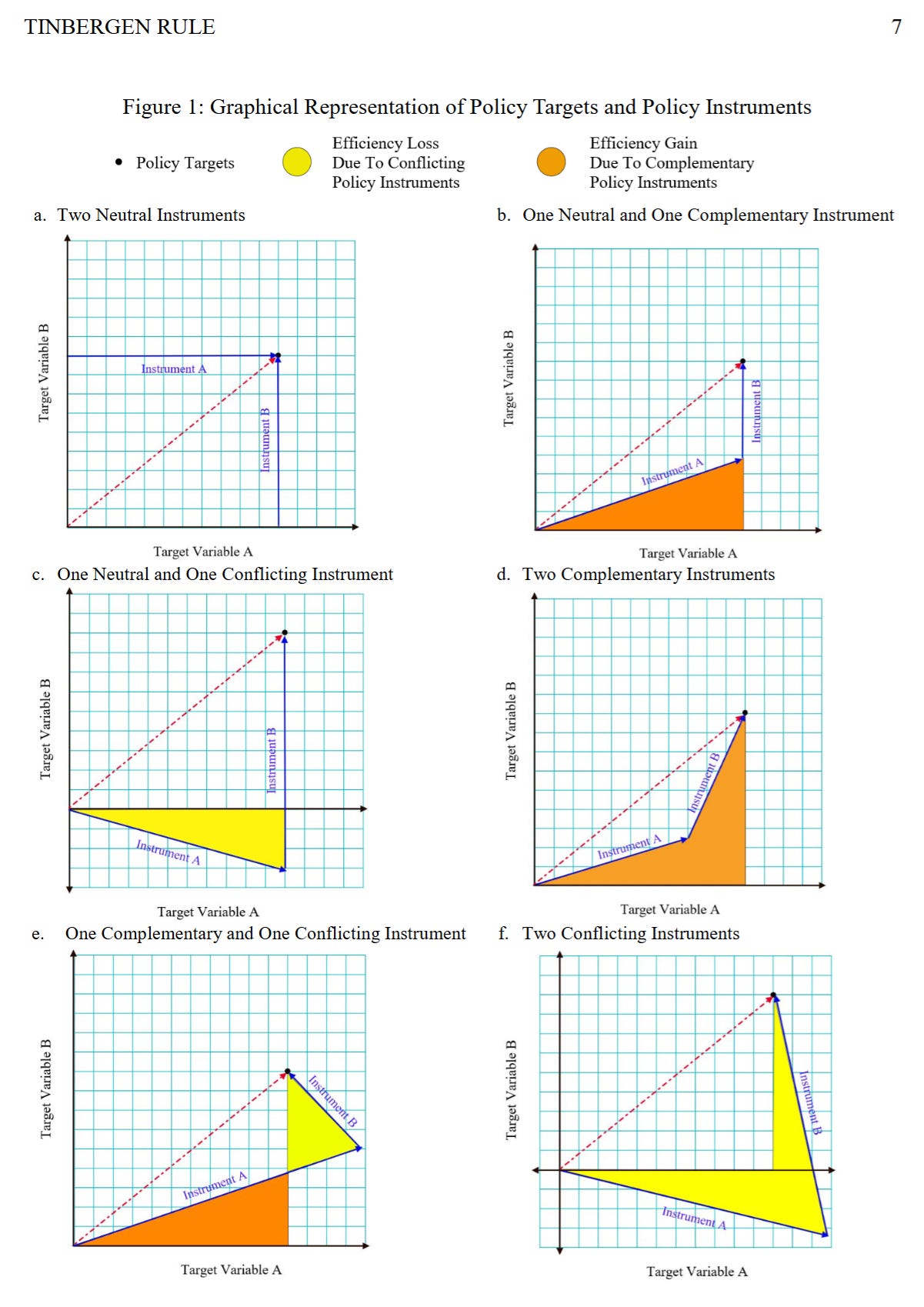
What Schelling calls a “dilemma” arises when the analyst is restricted to a single conflicting instrument—i.e. a policy that improves things on one dimension at the expense of another. Combining with a second instrument can often remove the dilemma, even if both instruments are conflicting! Visually, the solution to a dilemma looks like a dotted arrow (representing the sum of the two policy instruments) that goes up and to the right.
This is the sort of thing I wish was discussed in my public policy degree, instead of just endless kvetching about how terrible neoliberalism is.
The congestion charge, and then the Ultra Low Emission Zone, and then the extension of the ULEZ, are some of the best things ever done in London. I struggle with the pollution as it is; it would be unlivable for me here the way it used to be.