


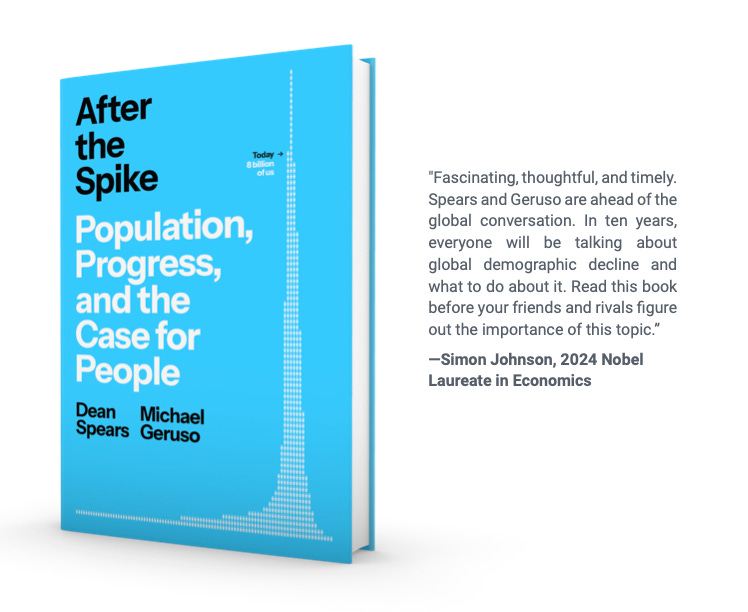
Dean Spears is a brilliant economist: an expert in health, pollution, population growth—and most recently, population collapse. His new book After the Spike (with Michael Geruso) has justly become a best-seller, and I’m delighted to be hosting him for a chat on Substack Live this Friday (7/25) @ 2pm.
If there’s anything you would like to ask Dean, put your question in the comments.
For a sense of Dean’s research, check out his website, or see some of these discussions of After the Spike:


And finally, subscribe if you’d like more chances to ask questions of philosophers, political scientists, and economists. (You’ll also get notified when the video of our chat gets posted the following morning.)

Considering that past coordination problems were often solved with innovation, might the absolute size of the prime aged population be the most important factor here for growth/prosperity as well as reversing demographic decline itself? If this is true, wouldn’t it shorten the window to reverse such trends—as insofar as populations are still growing they’re also getting older on average?
Heard Dean on the Singer podcast, very good stuff. Given the evidence you've seen in India, do you think its likely that in a world of universal good health care, adequate nutrition, women's education, high infant survival rates, and reproductive choice, that replacement rate is the highest average # of children women will voluntarily choose to have? If so, isn't the only policy issue how to manage a world in which all of these things happen together, since every one of these things seems to be non-negotiable?