


When I was a kid, I loved reading books. I read in the morning, before bed, during math class. I would even skip classes to go to the library; one teacher used to call me the Hall Wanderer.
But after high school, I found myself reading less and less. By the time I was in graduate school, I could go a whole year without reading a novel.
My sense is that this is a common thing for people of my generation. It’s also puzzling. If reading is so rewarding, why would anyone stop? Is there a way to get back into reading after taking a break, a way to fall back in love with novels, nonfiction, poetry, or whatever books grabbed you as a kid? To put it more generally, is there a way to get yourself to read more?
Thankfully, the answer is “yes.” This is one of those rare instances where a certain simple trick actually works. I can’t promise that you’ll magically end up with more free time, but you’ll win back your attention span and read more books—not just more books than you read last year, but more than you thought possible.
So what’s the trick to reading more? (Feel free to guess!)
Let there be no vulgar suspense. The way to read more books is to read what you enjoy—not what you’re supposed to enjoy.
Remember my story about wandering off to the library? When I was in the stacks, I wasn’t reading Plato, Aristotle, or the Encyclopedia Brittanica. I was reading Harry Potter, Garfield, and Encyclopedia Brown.

Later, in middle school, I did take a crack at Plato’s Symposium, but I gave up because I got tired of keeping track of the Greek names. Not the most flattering anecdote for a future professor, I know. But was that such a bad thing? I didn’t care back then how my reading habits would look to other people. Maybe that’s why I was able to read so much! I was reading for the sheer joy of it, following my curiosity—and if I ever lost interest, I’d put the book down.
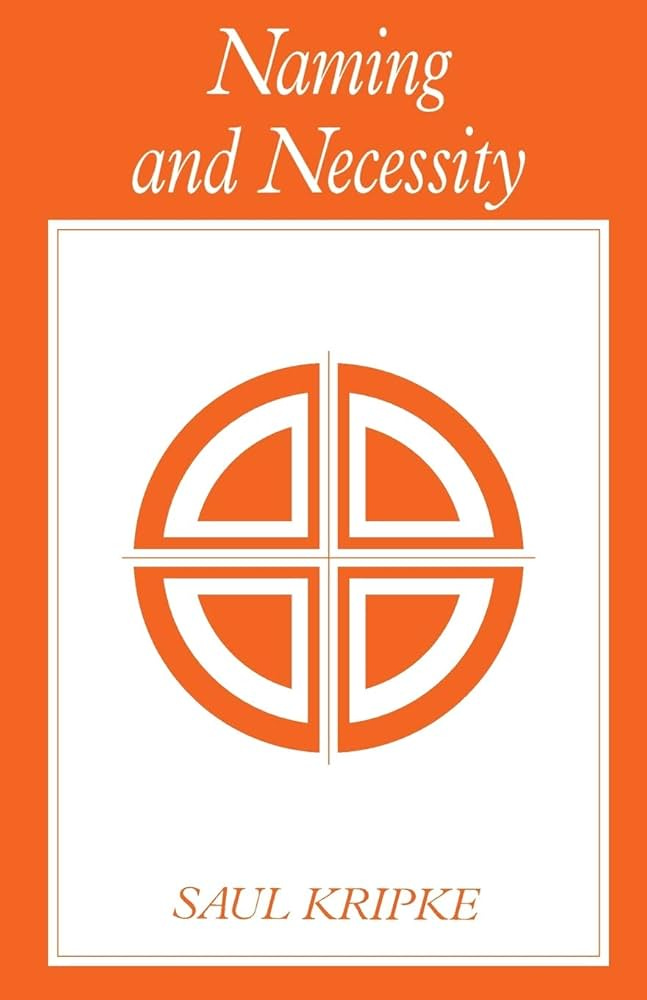
In college, I started reading books that would fill in the gaps in my knowledge of philosophy. Some of these I savored—like Kripke’s Naming and Necessity. (I remember sneaking away during a party at Tyler Seacrest’s place to read a bit of his copy.) Other books were more about nutrition than flavor, like Moore’s supremely bland Principia Ethica.
In graduate school, I started realizing just how vast my ignorance was. Philosophy is an ancient, gigantic subject, constantly expanding in all directions. There was so much to learn! How could I justify wasting time reading novels, much less comics? I was supposed to have already read so many other things. Reading anything for fun was a disgraceful dereliction—or at least that’s how it felt. Before too long, my reading diet became the literary equivalent of Soylent and boiled cabbage. My portions shrank accordingly.
This all came to a head in my first year of grad school. I was talking to my neuroscience friend Scarlett, whom I’d met at orientation, and the conversation turned to music. I mentioned that I played guitar, which came as a surprise to her. “I thought you just did philosophy all day.” Now that came as a surprise to me! Didn’t she know that I had all these other hobbies, that I played music and read novels and such?
Then it hit me. I didn’t play music and read novels and such—or at least I hadn’t for many months.
So I resolved to start reading again. To motivate myself, I started writing the title of every book I finished on a whiteboard next to my bed. This turned out to be hugely effective, though it did bias me towards slimmer books.
Looking back, I ended up reading a ton of extremely educational books—classics in economics, literature, and philosophy (including Plato!). But almost always, the books I read weren’t quite optimal. There were usually other, more nutritious things that I was supposed to be reading instead. But I have no regrets. If I’d tried to optimize my reading habits, I’m sure I would have just lost them altogether. The perfect truly is the enemy of the good when it comes to pleasure reading, probably because chasing perfection is so dependably unpleasant.
So to anyone looking to read more: I encourage you to get in touch with your own latent curiosity and read whatever you truly want to read. Don’t inhibit your love of books. Don’t overthink it. Just let your mind wander to whatever stories or topics it wants to explore. Once you’re back in the habit of reading, you can always throw in some vitamin-rich classics.
That’s my advice, stated rather abstractly. I’ll close with some more concrete corollaries.
When I was an undergrad, I asked Sinan Dogramaci for advice about learning philosophy. He told me I should buy a bunch of books that I know are worth reading—anthologies of important papers, classics by respected scholars, and so on—and leave them around my desk. Whenever I’m bored, I can thumb through them, look for something that seems interesting, and just read that.
That’s corollary #1: if you want yourself to read something, make it easy to access. This technique applies beyond academic texts, though it does require a bit of patience. You won’t necessarily read the entire anthology tomorrow just because it’s on your shelf. Still, if you keep it close by, you’ll be that much more likely to reach for it rather than your phone.
Corollary #2 is something I discovered much too late. Your phone and laptop (etc.) are constantly crying out for your attention. If books are going to have a fighting chance, they have to be attractive. To that end, make sure you like the place where you read. Whether it’s a favorite table at a cafe or a comfy chair at home, you want an inviting, well-lit environment for reading. It’s a subtle thing that I used to never think about. But it makes a difference.
In the end, there’s really no need to beat yourself up for not reading. Instead of self-flagellation, just try to make reading as easy and enjoyable as possible. It’s less painful—and more effective!

The way I have been recently reading novels is I leave my phone home, go to the sangucheria down the street, seat at the bar, order a chacarero and a beer and then proceed. I try to do it at least one evening per week as a sort of treat. It makes me look like a pretentious twat to the other - mostly working class - patrons, but I read half of Bolano’s 2666 in four sessions, so it is effective.
Otherwise, if I just read at home, I will grab a paper or a philosophy book from my 'to read' folder, which is fine, but then I run into the problem you mention above.
When I was a PPE undergraduate, at the end of my second year, my philosophy tutor asked me: what are you going to do this summer?
I replied: I’m just going to read lots of novels and history when I’ve got time off work
He said: your degree will go better as a result
I said: oh I’m not doing it for that, I just like history and novels, and I don’t have time to read that stuff during semester
He replied: exactly